
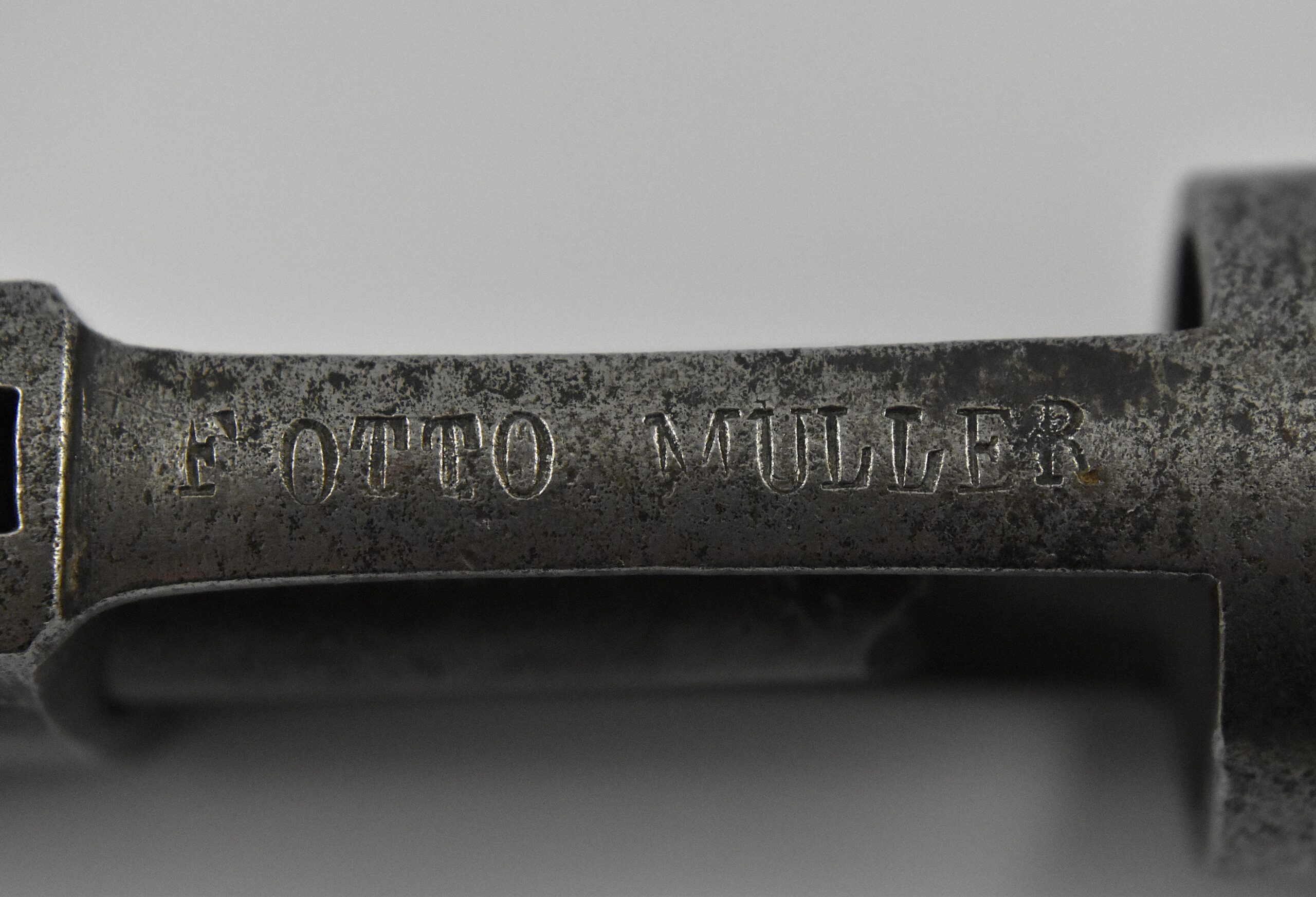
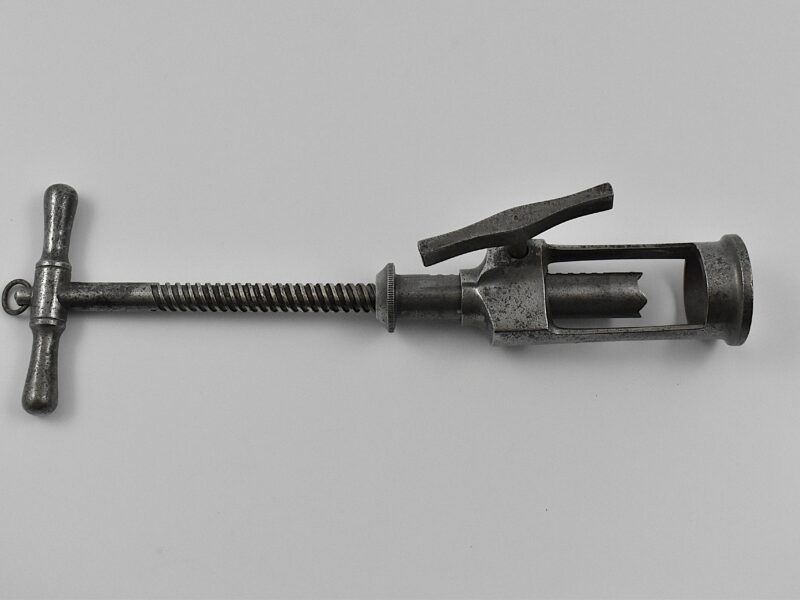
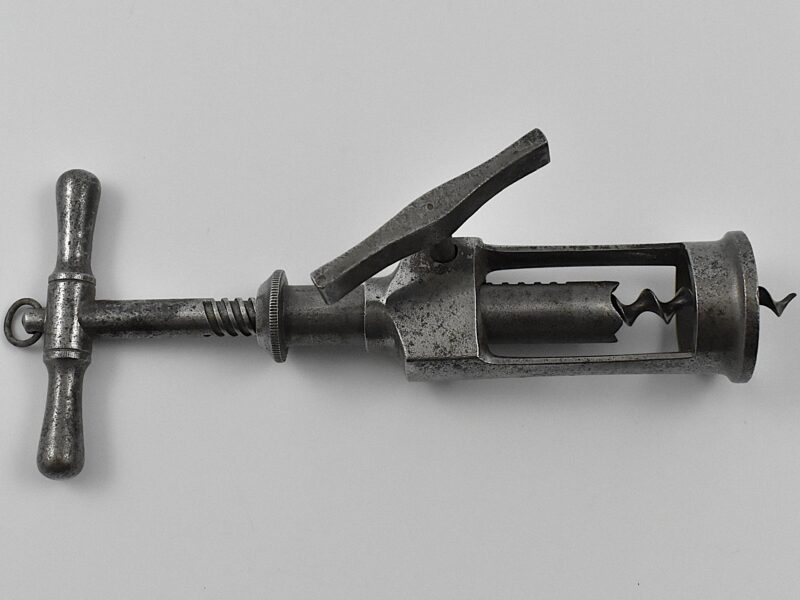
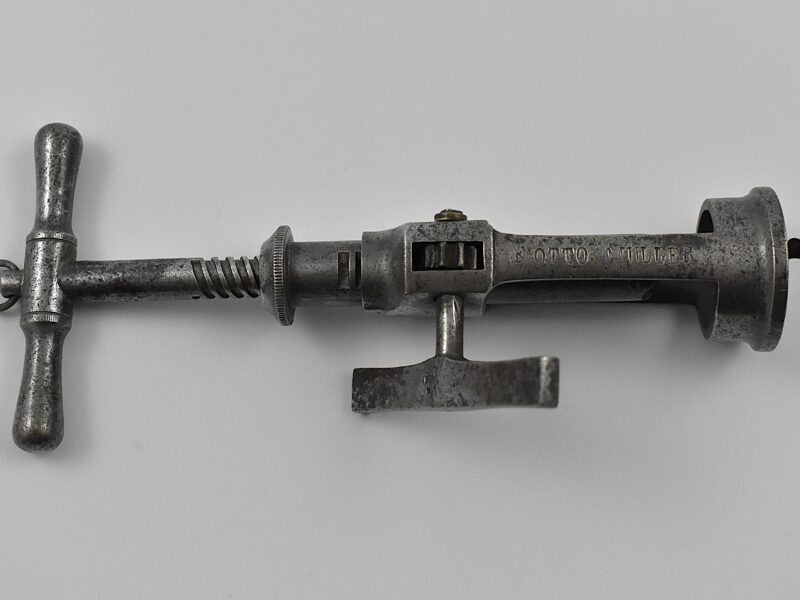
A German steel open frame corkscrew with side rack. The handle with a hanging ring leads to a threaded shank, and the second shaft has a machined side rack. Once the cork is penetrated the flat steel side wind raising handle pulls the cork from the bottle. This design has a cork ejector, the claws on the base of the second shaft, which helps eject the drawn cork from the perfect centre cut bladed worm by turning the handle in the opposite direction, without having to hold the cork. This example is marked “F OTTO MULLER” on the frame. Circa 1900.
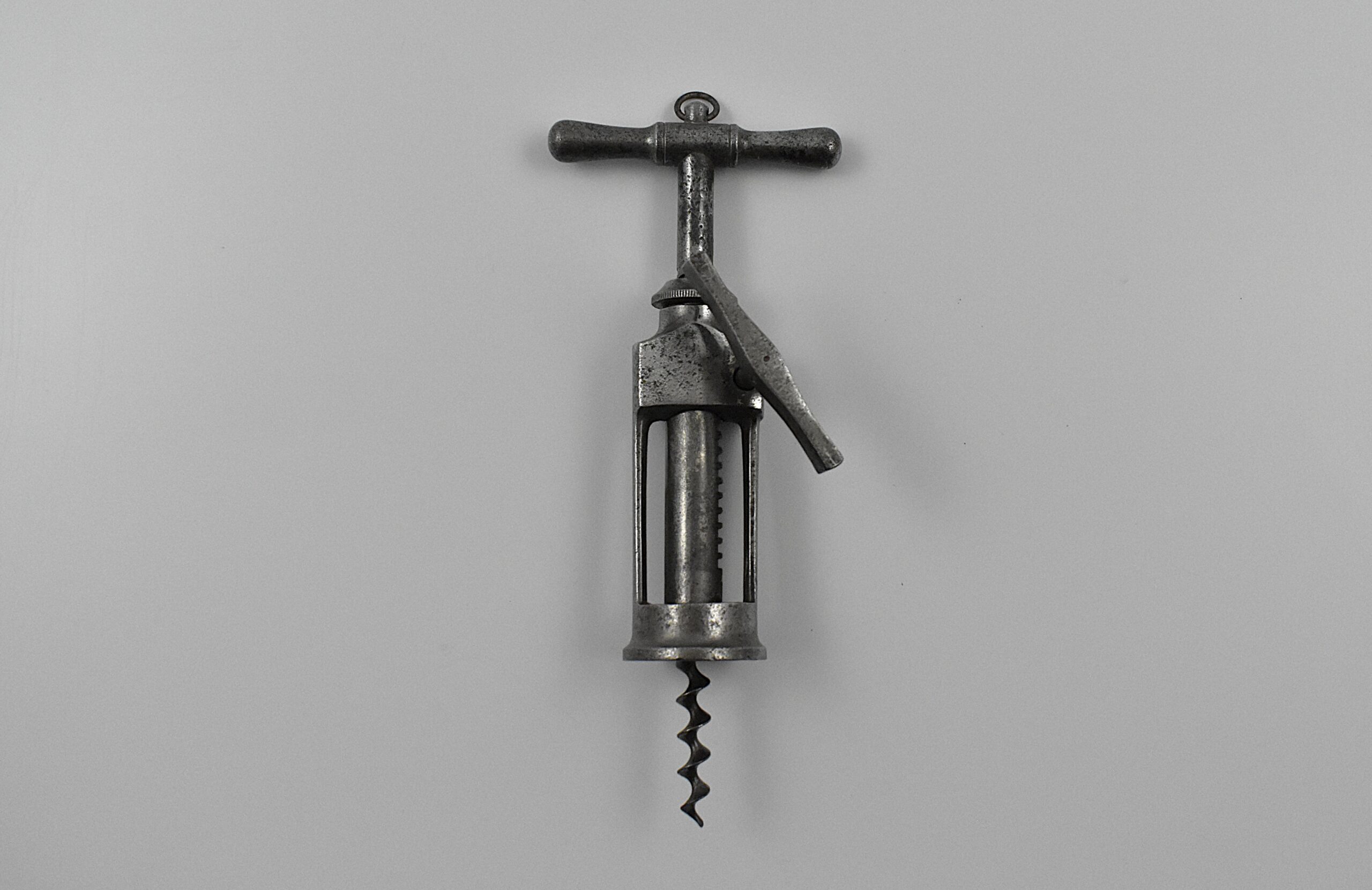
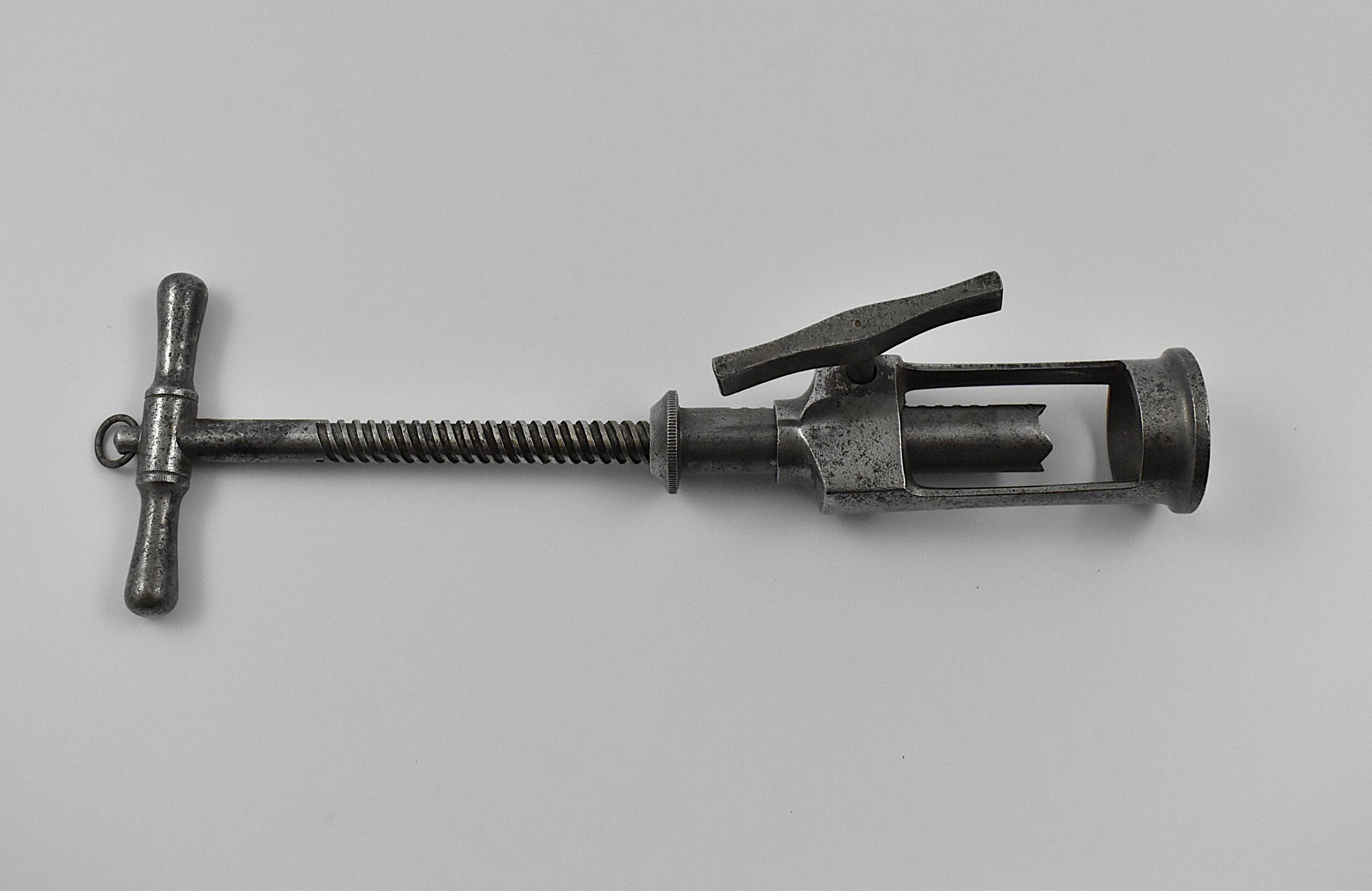

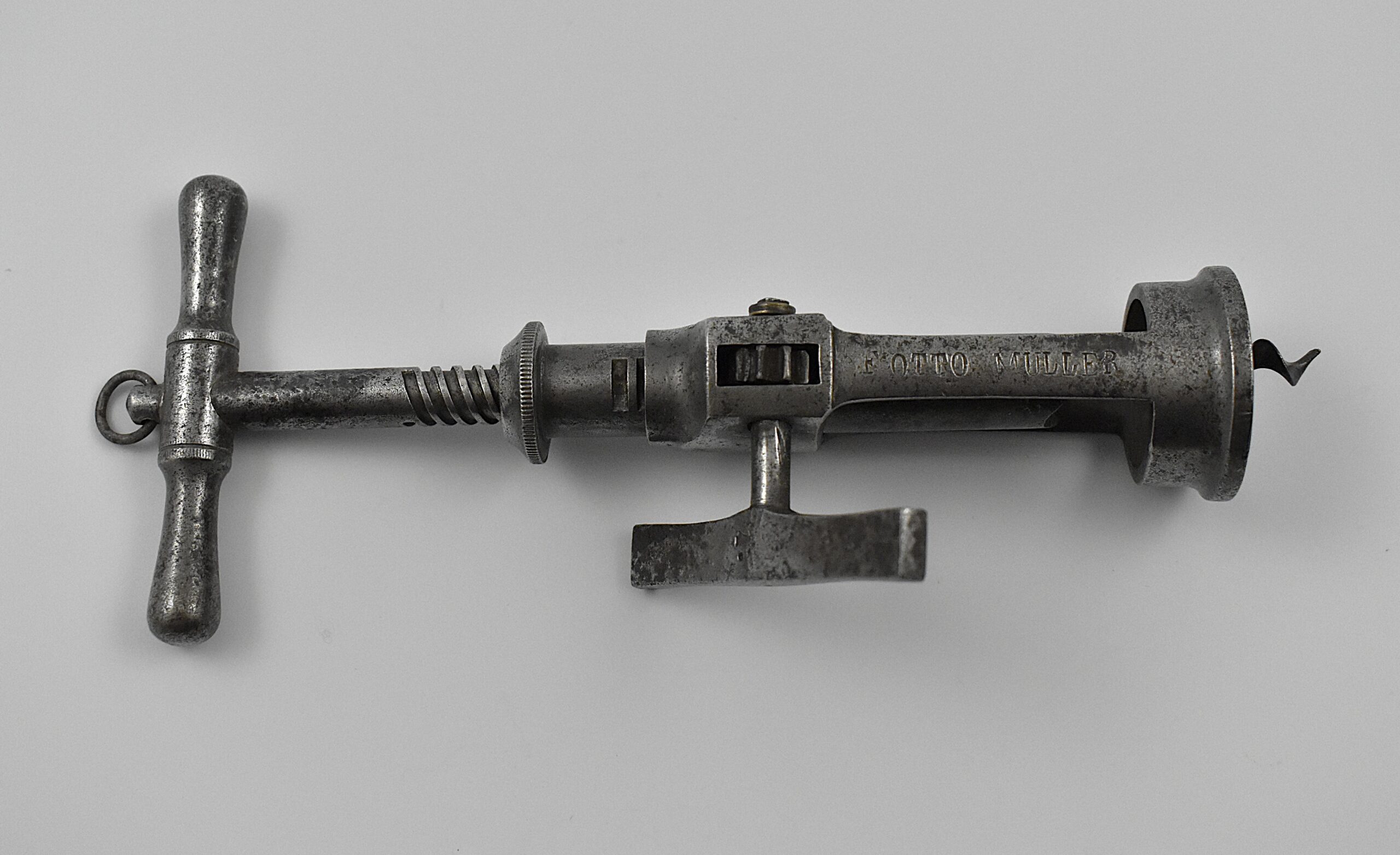

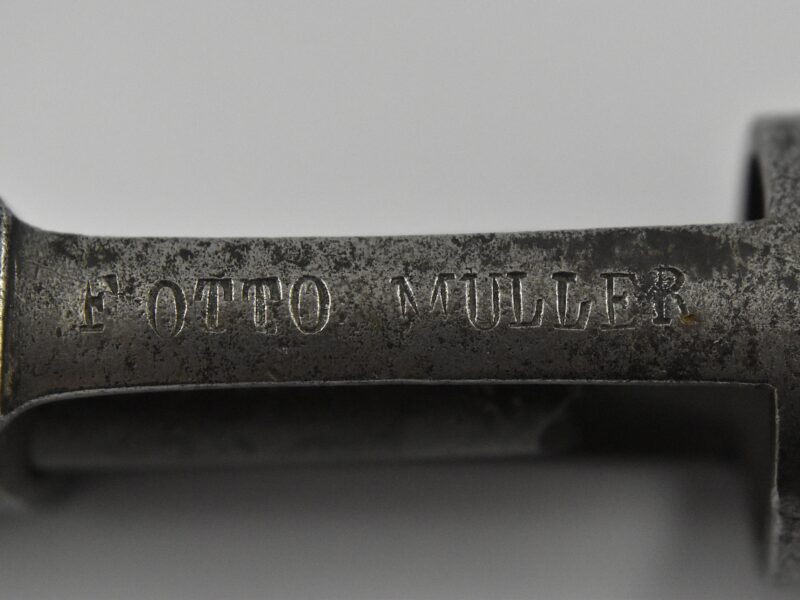
A German steel open frame corkscrew with side rack. The handle with a hanging ring leads to a threaded shank, and the second shaft has a machined side rack. Once the cork is penetrated the flat steel side wind raising handle pulls the cork from the bottle. This design has a cork ejector, the claws on the base of the second shaft, which helps eject the drawn cork from the perfect centre cut bladed worm by turning the handle in the opposite direction, without having to hold the cork. This example is marked “F OTTO MULLER” on the frame.