Showing 1–33 of 47 resultsSorted by latest
Corkscrews
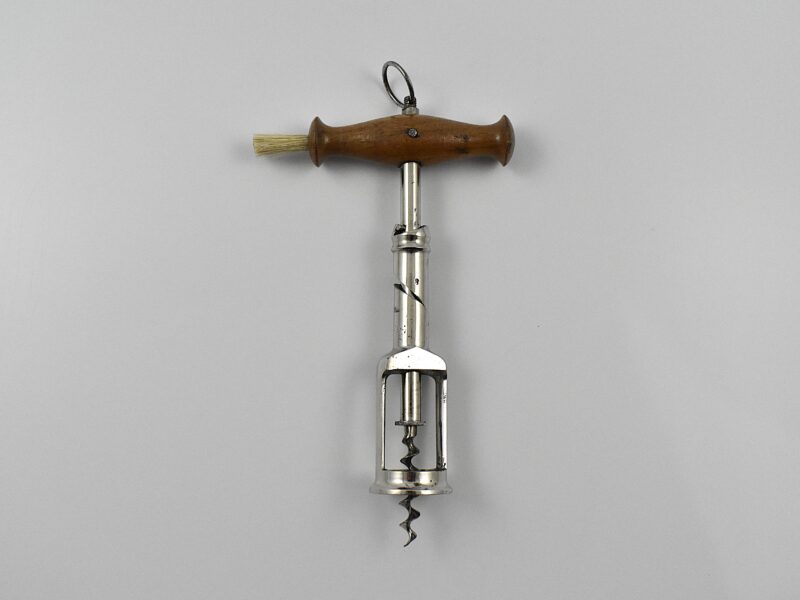
A German chrome plated steel open frame corkscrew with turned wood handle incorporating a dusting brush and hanging ring. The handle is turned into the cork and when the two pins in the shaft engage the top of the second shaft, this reverses and extracts the cork from the bottle. This design originates from the 1880 German patent taken out by Freidrich Kummer and later adapted by his son Louis Kummer. Perfect centre cut bladed worm.
POA
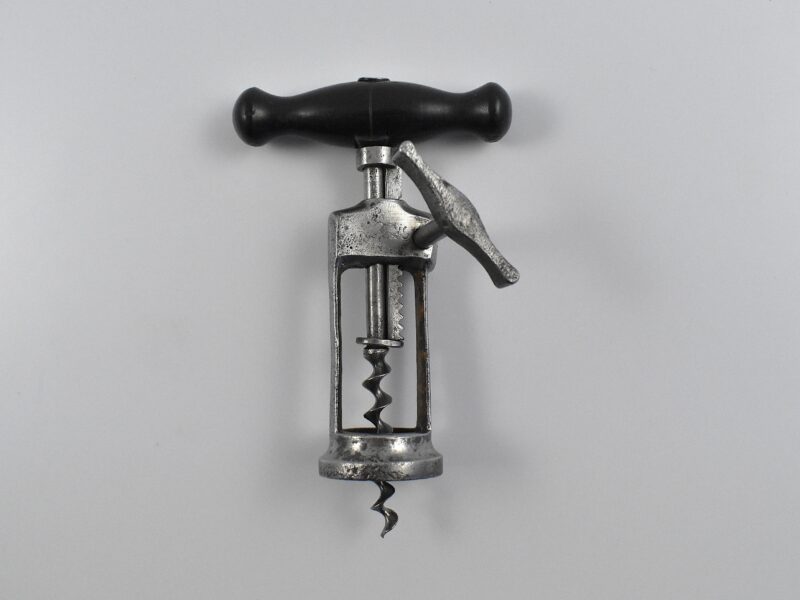
A German steel open frame corkscrew with side rack. The handle with a hanging ring leads to a threaded shank, and the second shaft has a machined side rack. Once the cork is penetrated the flat steel side wind raising handle pulls the cork from the bottle. This design has a cork ejector, the claws on the base of the second shaft, which helps eject the drawn cork from the perfect centre cut bladed worm by turning the handle in the opposite direction, without having to hold the cork. This example is marked “F OTTO MULLER” on the frame.
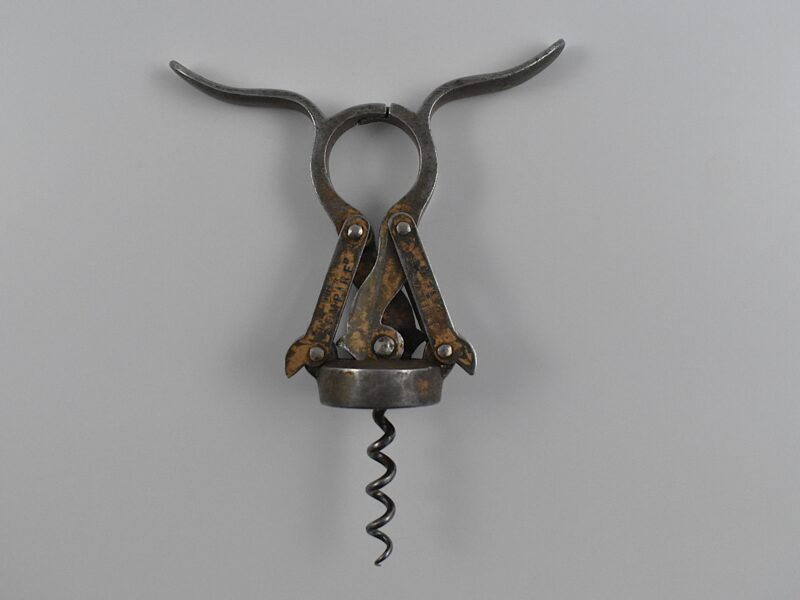
An all-steel James Heeley & Sons double lever corkscrew with the original copper bronze wash. This example marked “JAMES HEELEY & SONS 6006 PATENT DOUBLE LEVER” on the handle and ‘A 1 PATENT’ on the arms. Neville Smith Heeley trading as James Heeley and Sons of Graham Street, Birmingham was granted a patent No. 6,006 on the 23rd of April 1888 for this design.
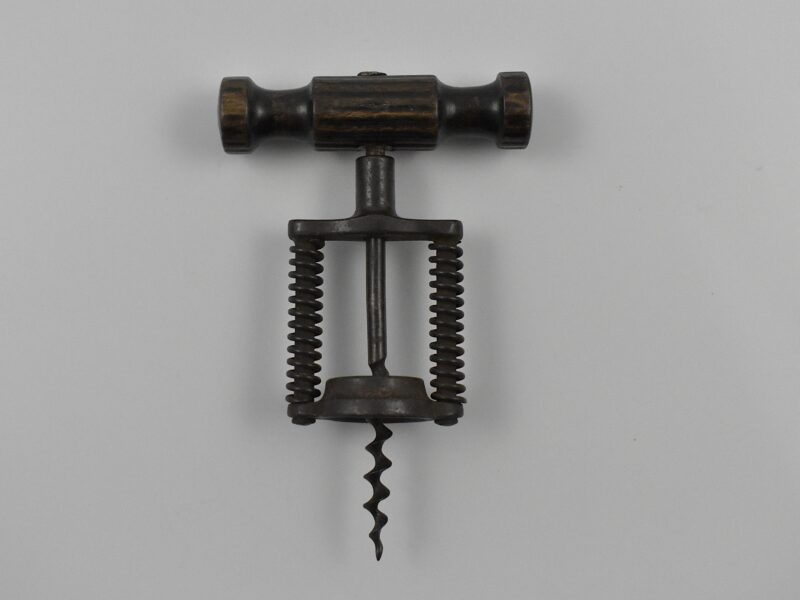
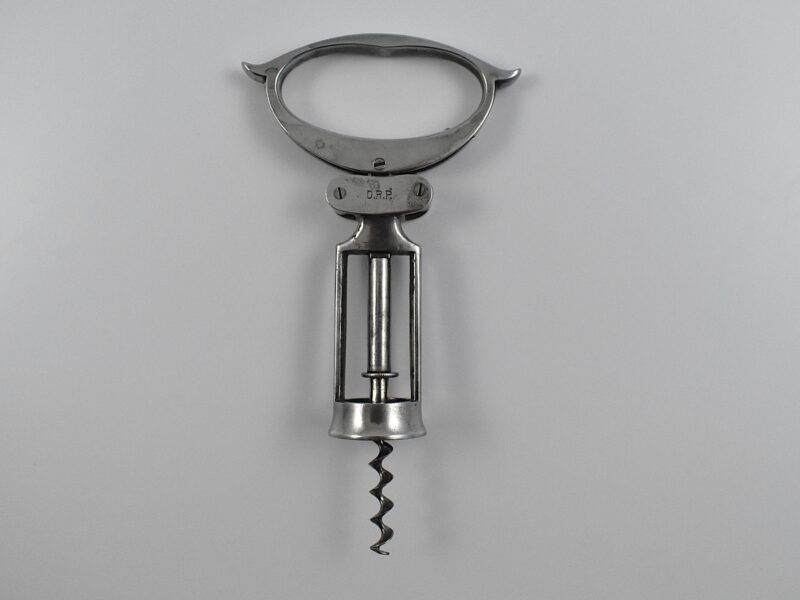
A German open frame corkscrew with continuous action having a double spring assisted frame. The frame is marked D.R.G.S” (Deutsches Reichs Gebrauchsmuster Schutz) which means it was protected by a registered design in the German Empire.
A rare sliding frame version of Edwin Wolverson’s ‘Signet’ corkscrew. This simple open frame mounted on the shank allows for centering the perfect Archimedean worm. This example is marked with a British registered design lozenge for 14 January 1876 number 297635. This was granted to Edwin Wolverson 131½, Gt. Hampton Street, Birmingham.
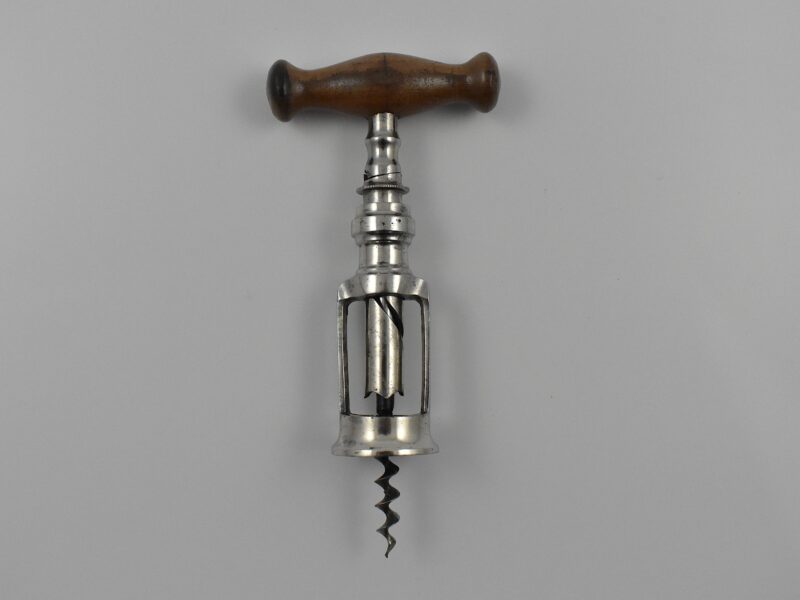
A German chrome plated steel open frame corkscrew with turned wood handle known as the “Mauser”. The handle is turned into the cork and when it engages the top of the second shaft this reverses and extracts the cork from the bottle. This was a German Empire registered design granted to Louis Kummer on the 14th of July 1904 and shown in his 1909 catalogue as the “Mauser”.
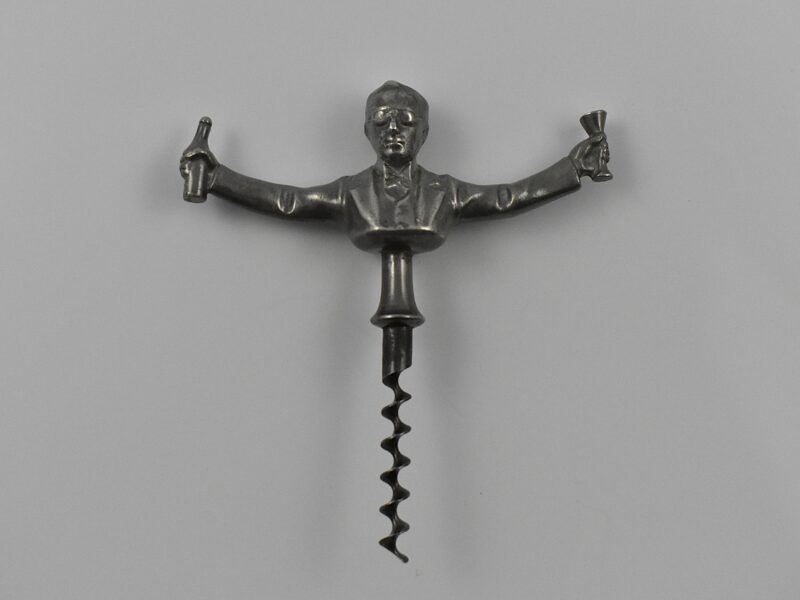
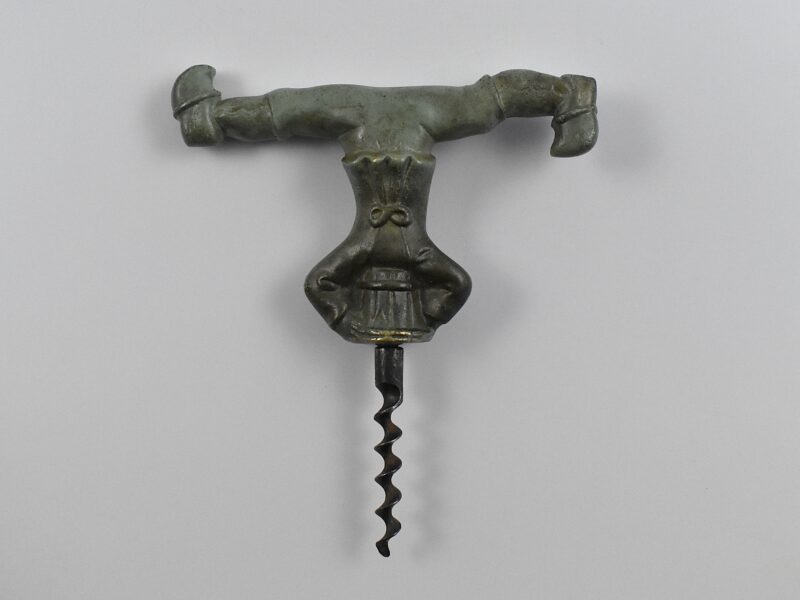
A Scandinavian straight pull cast pewter corkscrew with a representation of Ivan Bratt (1878- 1956) holding a bottle and glass in his outstretched arms. He was a Swedish politician who introduced the state – owned alcohol monopoly in 1917. He was detested for the introduction of the S. C. Bratt system which limited the purchase of no more than four litres of alcohol per month per person. This example marked “SWENSKIT TENN” (Swedish Pewter) under the back.
A chrome plated all steel mechanical corkscrew known as the ‘Bodega’. This was after Ernst Scharff’s 1899 German patent. This example marked “MADE ITALY” on the frame.
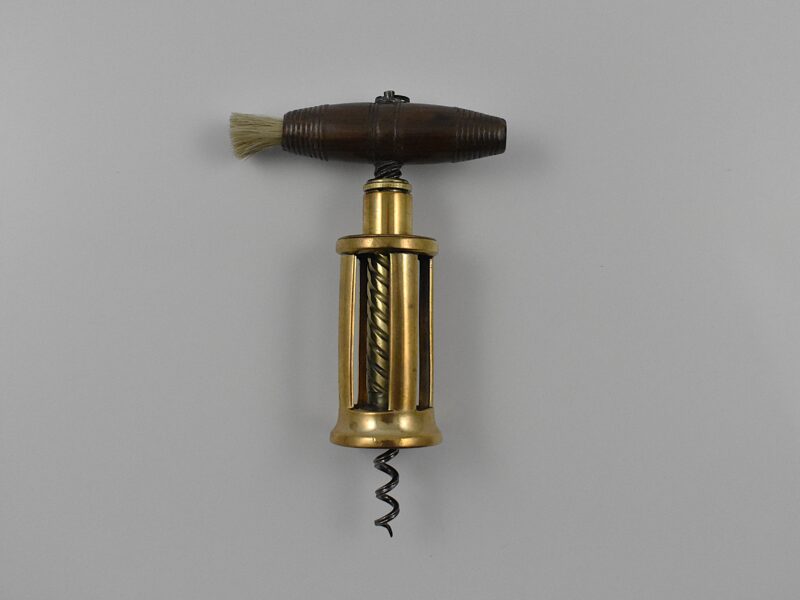
A magnificent brass Thomason IX four pillar corkscrew with a turned wood handle incorporating a hanging ring and dusting brush. Marked on the top of the frame “EDWARD THOMASONS COMPOUND PATENT NE PLUS ULTRA” with a coat of arms and on the button “THOMASONS PATENT NE PLUS ULTRA”. Edward Thomason’s patent was taken out the 7th of May 1802 and the “Ne Plus Ultra” is translated as “None Better”
An American hollow brass handled bell cap corkscrew by Reed & Barton with internal rolling ball, the bell cap designed by Walker. The handle moulded with a figure of Baccus and grape vines and is marked “REED & BARTON’ on one side and “42 BN” on the other.
A Swedish straight pull corkscrew with a representation of a nude woman seductively eating grapes. This is marked “C.V.H” on the shank for the firm of Carl Victor Heljestrand (1816-1861).
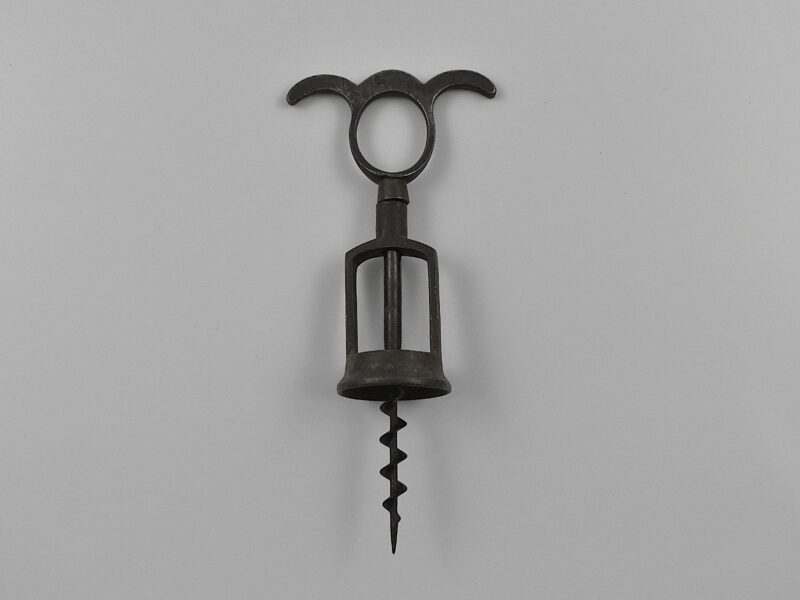
A magnificent mid-19th century English cast brass and steel corkscrew with a serpent design handle.
A French straight pull cast brass corkscrew with the handle in the form of a revolver.
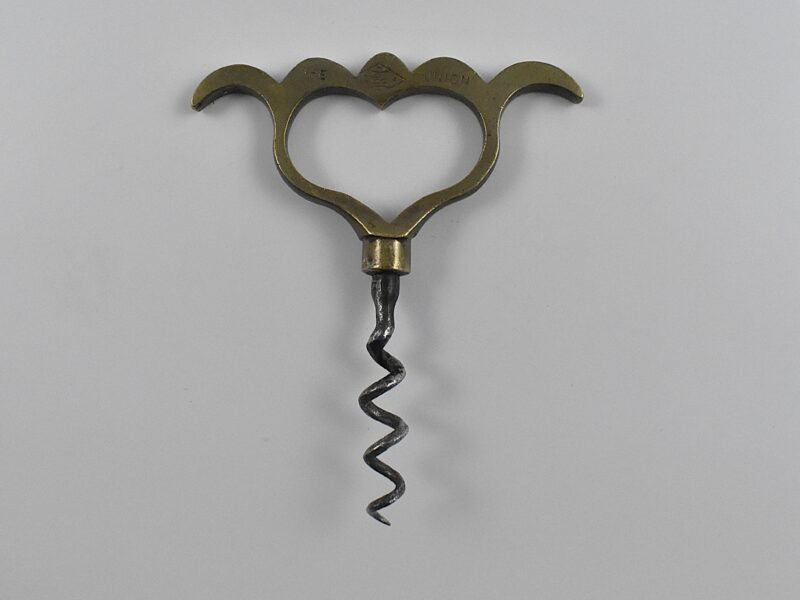
A rare English straight pull brass and steel corkscrew marked “THE UNION”.
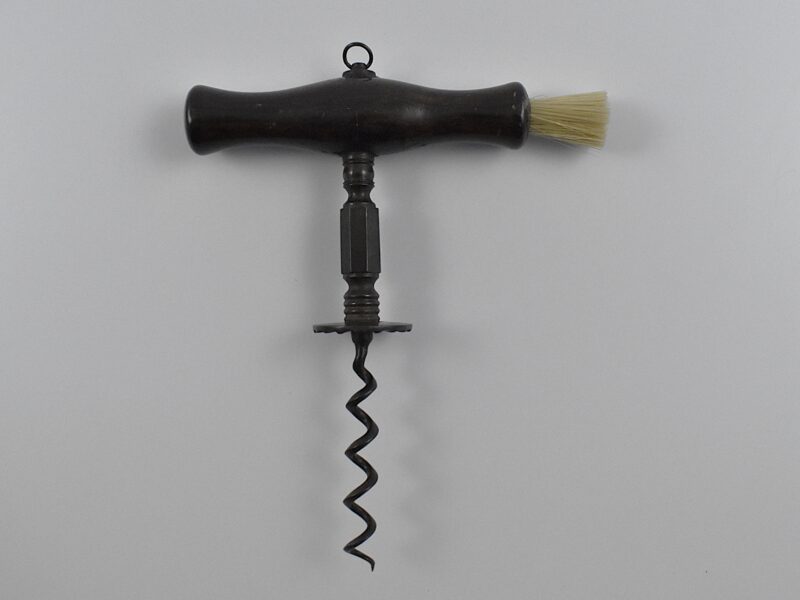
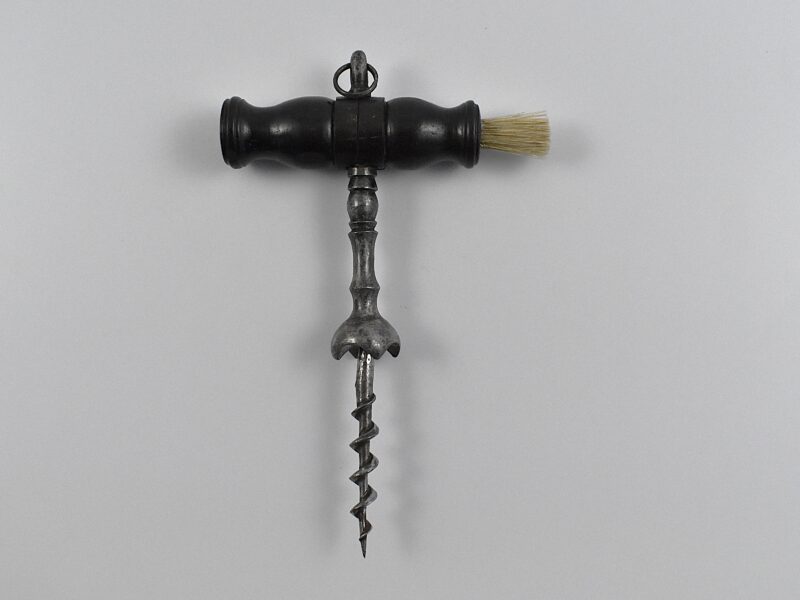
An English straight pull corkscrew with wood handle incorporating a dusting brush and hanging ring. Turned and faceted steel stem ending in a ‘Henshall button’, the underside of which is cut with fluting.
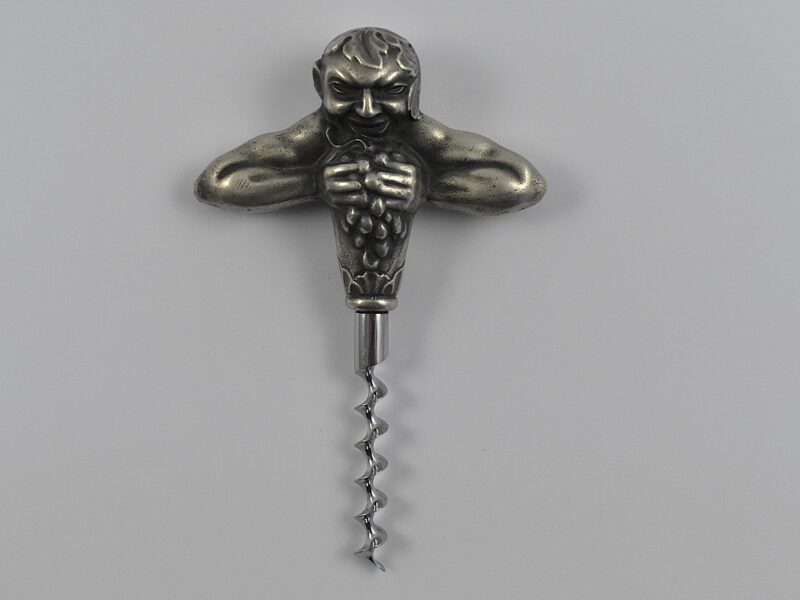
A Swedish straight pull corkscrew with a representation of Bacchus squeezing a bunch of grapes by the firm of Carl Victor Heljestrand (1816-1861).
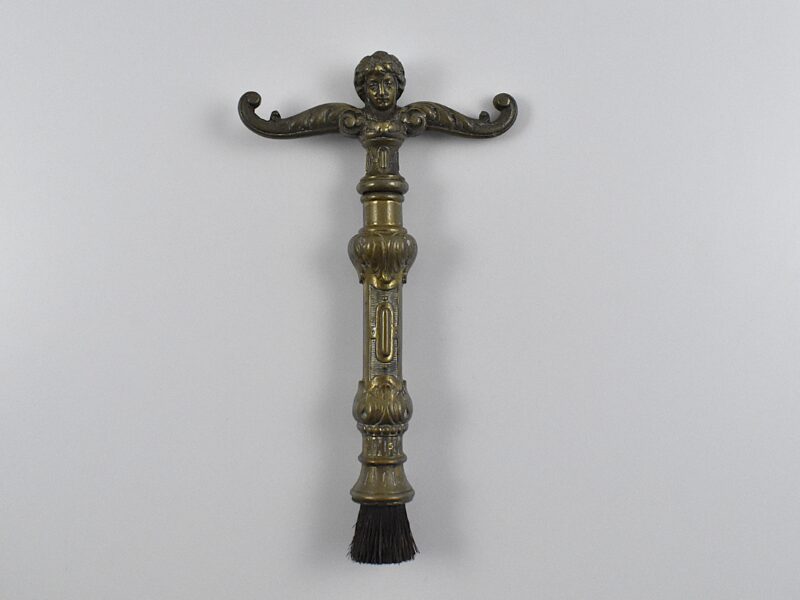
A magnificent straight pull cast brass corkscrew surmounted with the head of Bachus. The bayonet-fit sheath has a brush at the end.
A rare French straight pull corkscrew with a folding handle containing a cork press. This example is marked “PORT ?? B SGDG” on the top.
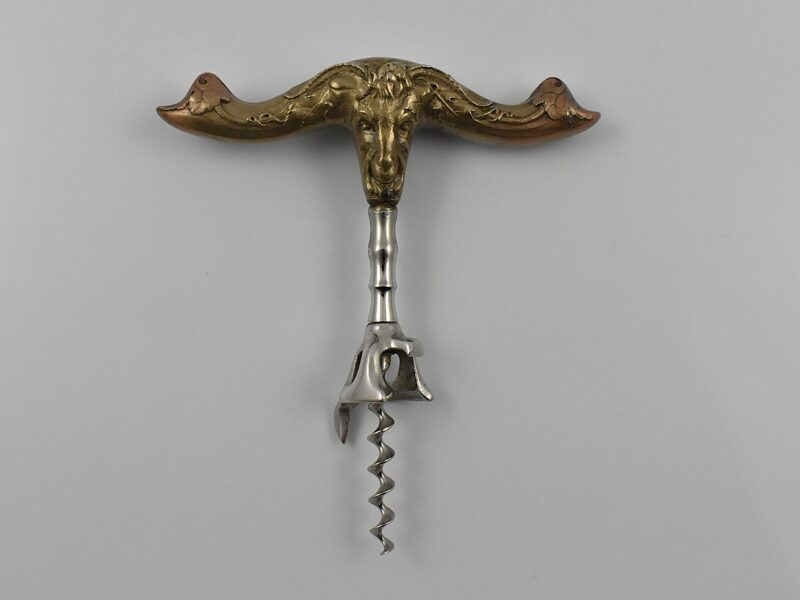
A magnificent mid-19th century English cast brass and steel corkscrew with an Indian lion head handle. Probably made as part of a travelling set, this is one of the finest examples we have come across. Perfect centre cut bladed worm with point. Circa 1860. (Provenance: Bert Giulian Collection 2024).
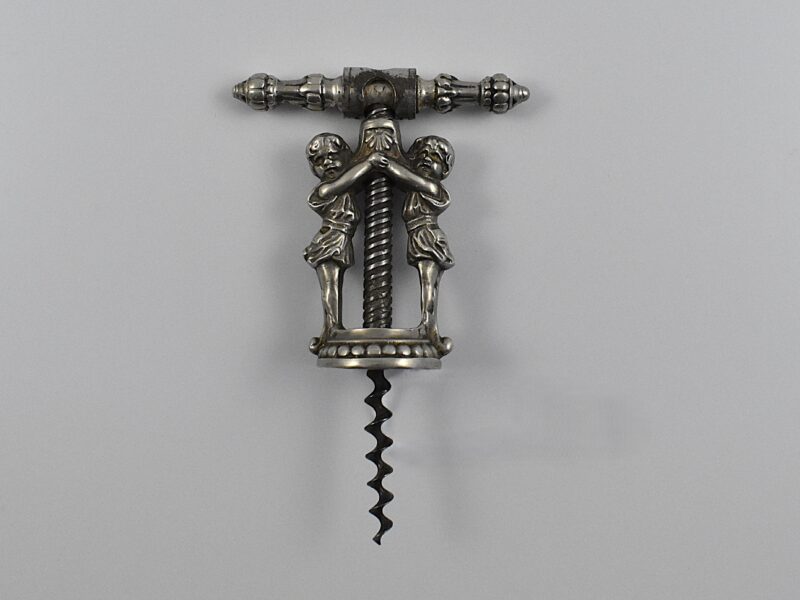
A German chrome plated cast decorative corkscrew with two girls forming the frame, having a swivel-over collar on the revolving handle. This is shown in the Thuringian catalogues as Reissmann’s patent.
A Swedish cast bronze straight pull corkscrew with a representation of a Dutch man wearing clogs with his head stuck in a barrel.
A rare English all steel, gold painted double lever corkscrew known as ‘The Empire’. This example marked “THE EMPIRE” and “J. HEELEY & SONS PATENT” on both sides.
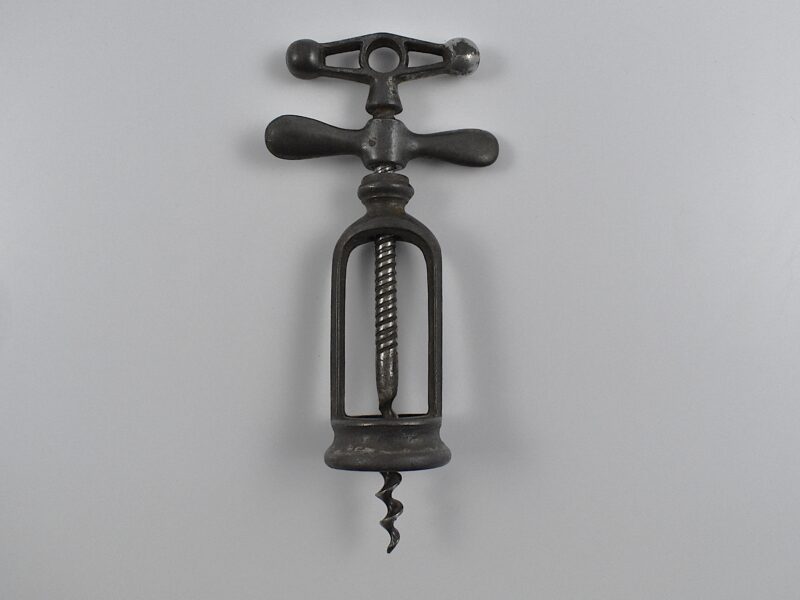
German open framed steel corkscrew by Valentin Rasch of Zella St. Blasii and this was his German Patent No. 20,803 granted on the 14th of March 1882.
A German steel open frame corkscrew with side rack by J. A. HENCKELS as shown in the Henckels catalogue at the end of the 19th century.
An English direct pressure corkscrew named the “PRESTO” by Charles Hull of Birmingham circa 1870.
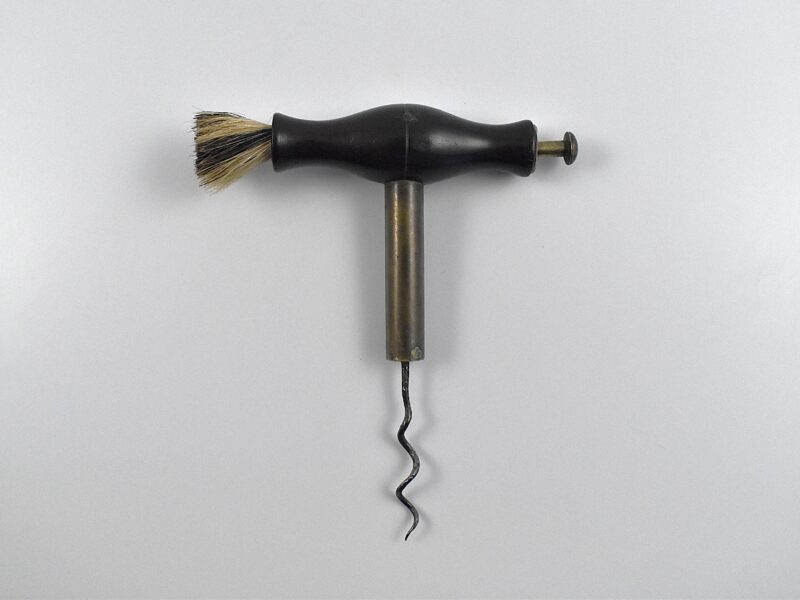
A French straight pull corkscrew with turned wooden handle incorporating a dusting brush and hanging ring.
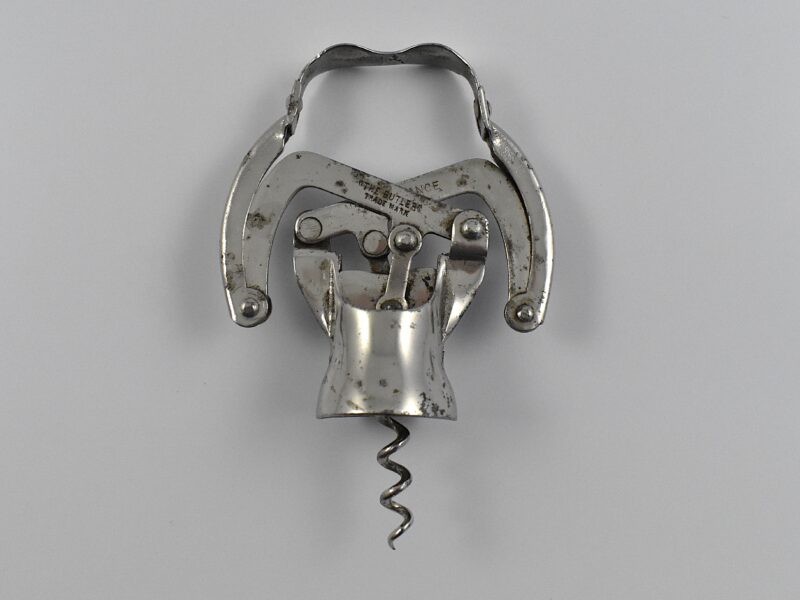
A French chrome plated corkscrew marked “THE BUTLER”, TRADE MARK, MADE IN FRANCE”
A French mechanical all steel propeller type corkscrew known as the ‘Aero’.
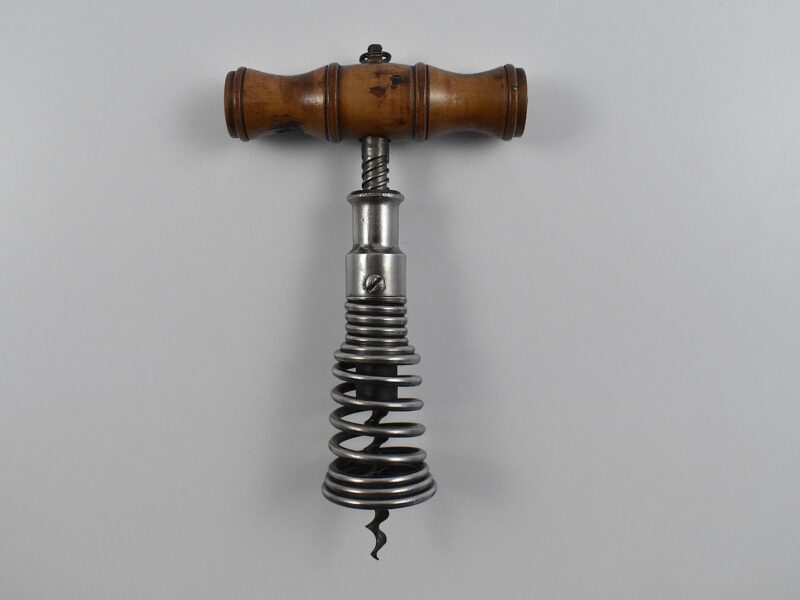
A German corkscrew with cone shaped coiled spring barrel which was a registered design No. 65,555 granted to Georg Giessler on October the 14th 1896.
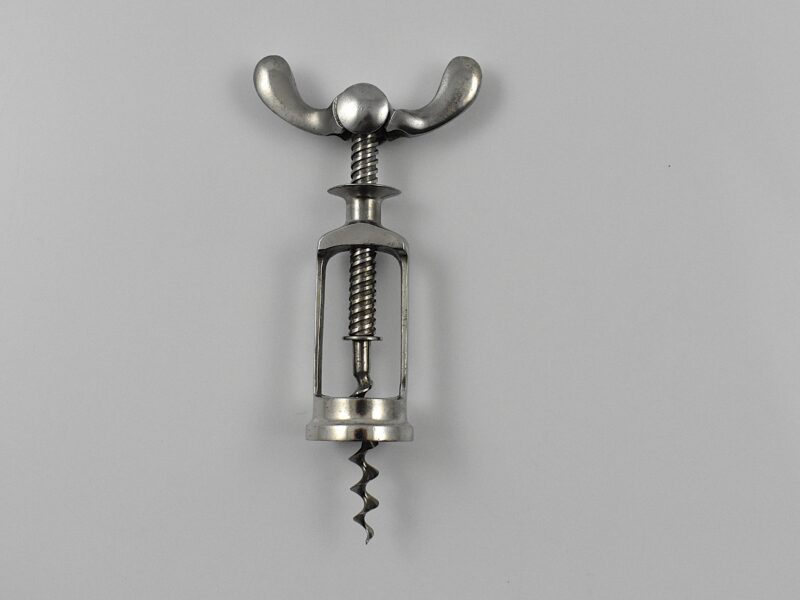
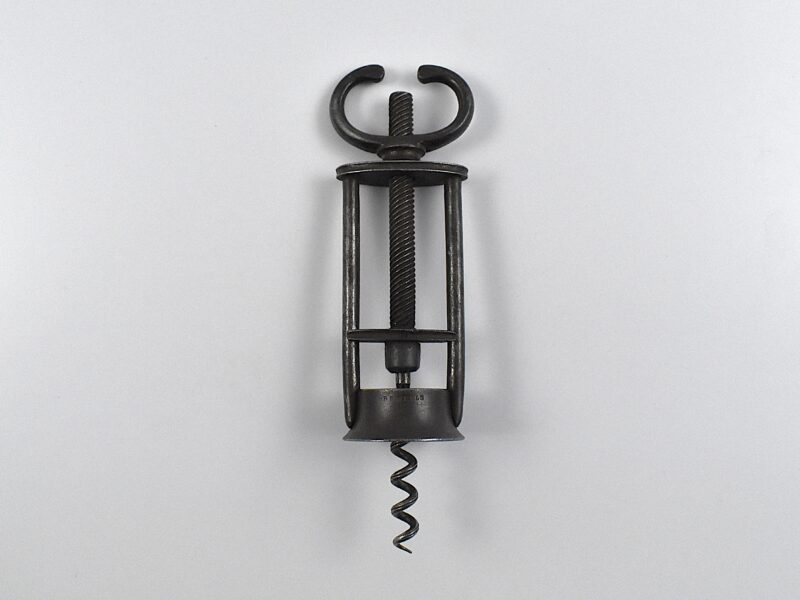
An English open frame two pillar corkscrew with a fixed wing nut handle retailed by B B WELLS of 431 WEST ST STRAND.
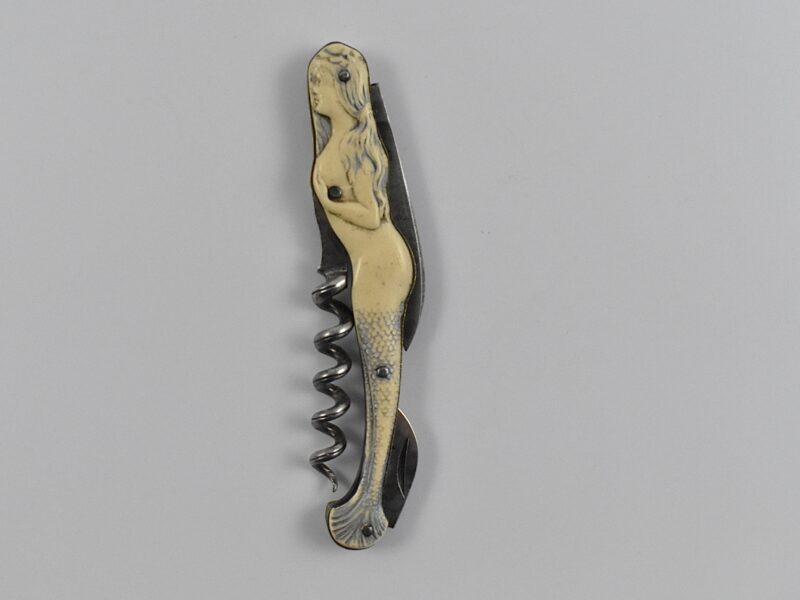
A rare German ‘Waiters Friend’ corkscrew with celluloid scales in the form of an Art Nouveau styled mermaid by GRAEFT & SCHMIDT.
An all-steel example of Stephen Plant’s 1884 corkscrew marked “WULFRUNA”.
An Italian mechanical brass, two pillar open frame, rack corkscrew marked “A. BARLACCHI FIRENZE” on the frame.